Rights for digital minds
BrainFi Gets in Your Head
If you want to read a book that feels like a very human story, Permutation City by Greg Egan is not the move. It' a fundamentally bloodless book.
Which might really be the heart of the book. The core element is the bloodlessness. Like, there's a breakup early in the book that couldn't possibly be more clinical and detached.
And detachment is really the core idea. It's like reading a computer simulation.
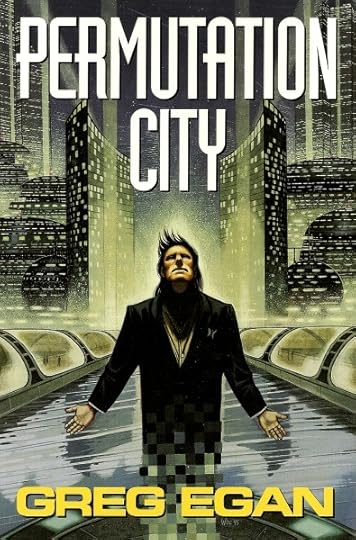
Let me just say that I don't want to try to go too deeply into this book. I feel like there are people who are wired to love it and then the rest of us who are like: What on earth did I just wade through?
If you're in the latter camp, as I was, it's a slog. But let me just say this:
If you believe that before long it might really be a question for people of whether or not they want to live in by letting their minds be simulated somewhere else, entirely digitally, then this book is for you.
Here's the big question it will raise though: If you can simulate your mind digitally, if you can upload yourself into a network, you are confronted with this possibility.
The "self" you upload may 100% feel like it is continuing the experience of being you. That's possible.
But you will still die. The you that you are, right now, most likely will not persist, in the scenario decribed in Permutation City.
How do you feel about that? What rights should the second you have?
Tanith Lee's Electric Forest gave us another conception of digital transfer, one where the "you" is continuous with your original body.
But here after the electric age, that conception is harder to believe.
—Brady Dale
After finishing: November 21, 2026
First version: November 5, 2026
Versions · current v4 ·
- Version 1 · frozen pin — Imported from 120.html
- Version 2 · frozen pin — Updated in Blynger
- Version 3 · frozen pin — Updated in Blynger
- Version 4 · frozen pin — Updated in Blynger